• H O M E •  W R I T E R 'S  N I B S  •  L I N K S  •  B L O G  •  Doré at My S P A C E  •  C O N T A C T

 •  S C R I B B L I N G S  •


PRIMITIVE ARCHER MAGAZINE
Hunting Through
Medieval Literature
 
INTERDISCIPLINARY HUMANITIES
Peter Pan


HORSE & RIDER MAGAZINE
A Whisper and a Prayer


CONFERENCE PAPER
The Masculine Mind
of Shakespeare's Women


COURSE CURRICULUM ARTICLE
Christine de Pizan

CONFERENCE PAPER
Hostages in the Rose Garden


SEMINAR TOPIC
Murder Will Out


"If you steal from one author, it's plagiarism; if you steal from many, it's research."  Wilson Mizner, 1876-1933, American Author
(Please use appropriate citations)

NATURE TO THE RESCUE IN
THE HERO(INE)'S JOURNEY

by Doré Ripley, ©2009

                    When [Rhodopis] was bathing, an eagle snatched one of her

          sandals from her maid and carried it to Memphis; and while the king

          was administering justice in the open air, the eagle, when it arrived

          above his head, flung the sandal into his lap; and the king, stirred

          both by the beautiful shape of the sandal and by the strangeness of

          the occurrence, sent men in all directions into the country in quest

          of the woman who wore the sandal; and when she was found in the

          city of Naucratis, she was brought up to Memphis and became the

          wife of the king.

                                                                                                      Strabo 17.1.33-34

          Strabo recorded this happily-ever-after Cinderella story around 20 AD as a rebuttal to the historian, Herodotus, who reported that one of the pyramids at Giza was the tomb of the Pharaoh's Cinderella wife. In his Geography, Strabo describes Rhodopis as a slave girl kidnapped from her native Greece and taken to Egypt where she became a household slave. But while she did attract the attention of the Pharaoh, the Pharaoh Amasis could not have built Rhodopis a pyramid tomb because, as Strabo clarifies, she eventually left the Pharaoh to become the "beloved of Charaxus, [the poetess] Sappho's brother, . . . who was engaged in transporting Lesbian wine to Naucratis for sale" (17.1.33).

          Confirming the existence of this ancient love triangle, Herodotus reinforces that Rhodopis was a "fellow-slave of Aesop the fable writer . . . [and was rescued by] Charaxus of Mytiline, . . . brother of Sappho the poetess, [who] paid a large sum to redeem her from slavery. . . . [and] when Charaxus returned to Mytilene after purchasing Rhodopis' freedom, he was ridiculed by Sappho in one of her poems" (155).

                     Lucky lady with luxuriant hair

                    And unfulfilled desire,

                    Even while rumor reports that

                    A god is leaving you to possess another,

                    At the same time another fate awaits you.


                   Thus Aphrodite, irritated by the sirocco,

                   Complains, with no hint of pride,

                  That somehow Doricha [Rhodopis] has once again

                  Attracted a youth her own age.

          Sappho insinuates that the Pharaonic god-king dumped the Greek courtesan for someone else, leaving Rhodopis free to pursue a wealthy wine merchant. From history's event horizon, we can view Strabo and Herodotus's historic reports as myth, where an ancient kernel of truth grew into a local legend, but "[h]istory is more than merely a pileup of facts or a chronicle of the past; it is an art, and a very literary one at that" (Guelzo 1); an art, which in this case, appears to be a battle between the two greatest historians of the classic world. The Pharaoh did not record the story of Rhodopis, and Sappho's poetic commentary about ancient female opportunists is acknowledged in Herodotus's report of a courtesan who was honored with a pyramid tomb, compelling Strabo to rebut that claim with the story of the Cinderella Rhodopis. Strabo's reporting offers modern day readers the foundation of the Cinderella ur märchen-a märchen recorded around the world. While the most complete written version of the tale was later recorded in China, Strabo's is the earliest written text of a Cinderella type story, resembling the familiar märchen in two significant ways: the magical slipper and the animal helper.

          Rhodopis's slipper is delivered to the Pharaoh by an eagle, but the eagle is markedly absent from the pantheon of Egyptian gods in spite of the "seventy-two different wild and domestic bird species . . . [that] can be distinguished in Egyptian iconography" (Houlihan 136). Since the Egyptian civilization was located on the Nile delta, almost all the avifauna recorded by the ancient civilization is that of water birds, mostly ducks, geese, and cranes (Houlihan 139). Many waterfowl were mummified and entombed with various pharaohs who decorated their crypt walls with friezes of duck hunting and trapping (Houlihan 141).

           During the Ptolemaic dynasty, beginning after Alexander the Great's death in 323 BC, the Greeks not only headed the Egyptian state, but also brought the sacred eagle of Zeus to that land (Houlihan 137). An eagle grasping a thunderbolt appears on Egyptian coins of the Ptolemaic period, and it was a thoroughly Greek Strabo who visited Egypt in 25-24 BC with the Roman prefect, Aelius Gallus, on an expedition to Upper Egypt (Strabo 83) shortly before Egypt became part of the Roman Empire (Gahlin 7). Strabo wrote the Egyptian Cinderella tale of Rhodopis in 20 AD, complete with its eagle helper, but while representations of the raptorial species are not rare in Egypt, the falcon, not the Greek or Roman eagle, tops the list.

          The falcon, the sacred bird of Horus, is the most widely depicted of all avifauna in Egyptian iconography (Houlihan 160). None of the gods and goddesses inhabiting the pantheon of Egypt adopts the eagle form (Gahlin 24). Geb wears a goose on his head (Gahlin 25), whereas Hathor wears a falcon on hers. Montu is often portrayed as falcon headed, and Mut and Nekhbet are depicted as vultures. Vultures decorate coffins, geese decorate tomb walls, but in Strabo's reporting of the "fact-based" prototype for the Cinderella story, he specifically names Rhodopis's helper as an eagle.

          To the Greeks and Romans, the eagle represents power and justice, and was associated with Jupiter and Zeus. Was Strabo creating a sensational story fit for his Roman audience? A contemporary tabloid sheet like the ones that now grace the check-out lines of every grocery store, or was his story, complete with a sympathetic animal helper, a fable meant to, in part, recreate "the peaceful conditions of life enjoyed in the golden age" (Steiner 45) when animals and people lived in a "harmony from which human beings have progressively fallen away in the course of time" (Steiner 45).

          The ancient Greeks, like later Christians, believed that during the golden age animals and humans lived in "peaceful coexistence . . . in a gardenlike paradise" (Steiner 45)-a paradise typified by the writings of both Hesiod and Ovid. Pythagoras went so far as to "espouse an ethic of kinship with animals based on the doctrine of metempsychosis or transmigration of souls" (Steiner 45). If one believes that souls can migrate between speci, then humans "have a fundamental continuity with at least some nonhuman living beings" (Steiner 49) and as Empedocles states, "all things . . . have wisdom and take part in thinking" (qtd. in Steiner 50). But Socrates in Plato's Phaedrus disagrees, stating that humans are a higher form of life, because only they can be "seeker[s] after wisdom or beauty" (qtd. in Steiner 46), and when "Aristotle denied reason to animals" (Steiner 53), the ancient attitudes towards animals changed. The author of Anthropocentrism and Its Discontents, Gary Steiner states, "the moral status of animals shifted fundamentally once it became a philosophical commonplace to assert that reason or understanding distinguishes human beings from 'the beasts'" (53). Strabo's eagle-helper is denied kinship with humankind, but not so in the Chinese version of Cinderella where a dead parent is reincarnated as a pet fish.

          During the T'ang dynasty (618-907 AD), a Chinese Cinderella märchen, was recorded by a court official who collected fables into an encyclopedic work (Louie preface). His Cinderella fable includes all the main elements of the story, the death of the beloved father, the animal helper, the shoe motif, the evil step mother and sisters who try to keep Cinderella from the festival, and Cinderella's eventual recognition by the "prince" who marries her and thereby completes her heroic journey. At the beginning of the 21st century, it is hard to imagine Cinderella as a heroine, but up until about one hundred years ago, most women found the quest for the proper marriage the only journey open to them. From Shakespeare to Austen to modern day Harlequin romances, the female obsession to find and procure a husband is portrayed much like Joseph Campbell's outline of the heroic cycle in his epic work, The Hero with a Thousand Faces.

          Cinderella is a strong central character engaged on a heroic quest within the confines of the traditional female home, to obtain a husband of her own choosing, and thereby gain entrance to the enchanted domestic space. This quest for the ideal mate places her firmly on the wheel of Joseph Campbell's heroic cycle. The reluctance of Campbell and many other theorists to view marriage as an end to any heroic quest could leave Cinderella occupying the cold ashes of the traditional feminine hearth, but she's not easily daunted. Her animal helpers pick her up, dust her off, and propel her on her quest.

          Traditionally, scholars believe the heroine's rare journey occurs when the new bride somehow becomes separated from her husband (Harris 355). Many other critics cannot imagine Cinderella engaging in a heroic journey at all. Bruno Bettelheim believes the Cinderella story conveys degradation and sibling rivalry leading to transference in child readers as they readily see themselves in Cinderella's position (Bettelheim 236-237). This seems plausible, but if Cinderella is an archetype Everychild, Bettelheim's assessment leads to a scathing indictment of family dynamics where it is easier for children to envision themselves as the victims of sibling rivalry or domestic abuse. Contrary to modern academic or psychological presumptions, this assessment suggests that the adolescent Cinderella struggles to get out of the house in order to go on a female hero's quest and obtain her marriage to the prince.

          In The Hero with a Thousand Faces, Campbell claims the steps of the archetype hero's transformative journey are found in "virtually all mythologies of the world" (Campbell cover). After the hero separates from the innocent world of childhood, he receives a call to adventure (Campbell 49). Sometimes the hero refuses the call, but eventually concedes (Campbell 59), thereby gaining supernatural aid or guidance (Campbell 69). Crossing the first threshold leads to the region of adventure where the hero is thrown into the belly of the whale, completely cut off from his known world (Campbell 90). Initiation begins on the road of trials (Campbell 97), with the hero going through tests and ordeals, and ends with the hero's symbolic death. According to Campbell, the hero eventually meets with the goddess, sometimes engaging in a sacred marriage (Campbell 109), which is often a hampered by a temptress who tries to sway the hero from his quest (Campbell 120). Along the way the hero achieves atonement with the father, or some other powerful figure (Campbell 126) before the apotheosis of the hero, or his rising above the corporeal world (Campbell 149), where he receives the ultimate boon (Campbell 172). The hero then sets out on the return journey (Campbell 193), taking magical flight (Campbell 196, 207), and when he finally returns to the familiar world, he has the wisdom to become the master of two worlds; the supernatural or spiritual, and the mortal (Campbell 229). Like Campbell's male heroes, Cinderella engages in a hero's quest for a marriage to the prince that makes her the master of the enchanted domestic space.

          Campbell's hero's journey begins and ends in the same location, but like most women, Cinderella starts her journey in her father's (now stepmother's) house, with her odyssey ending in her husband's dwelling. Does this make Cinderella's realization of Campbell's journey impossible? As Melodie Monahan states, "Heading Out is Not Going Home" (589) for the heroine, while starting out is going home for the male hero: he heads from a patriarchal home, out into a patriarchal society (Monahan 590) where his traveling is never questioned or seen as odd. On the other hand, heading out and returning are problematic for the female (Monahan 590). Just the act of crossing the threshold is seen as a female revolt, and a woman, once empowered by that success, "will resist subordination in a household" (Monahan 590). Campbell's mythic beginning and ending of the hero's journey at the patriarchal home, applies to a man who can travel abroad freely, not the woman relegated within domestic boundaries. But indeed, Cinderella does end where she begins. When she marries the prince, Cinderella recreates her father's house in her husband's home, while also reinforcing Campbell's Oedipal atonement with father. This enables Cinderella to rule an enchanted domestic domain, thereby releasing her from the bonds of drudgery, even though she retains a subordinate position to the husband/father.

          Joseph Campbell addresses female quests, labelling Psyche's road of trials as "charming" (97) partly, because "all the principal [male/female] roles are reversed" (97). The point being, Campbell's "mystical marriage" (109), which occurs halfway through the cycle, marks the end of the fable and heroic journey for the girl/woman. While Cinderella's journey ends in nuptials, Cinderella does not run across the goddess and get married mid-journey like her male counterparts. Instead, Cinderella's mystical marriage is the quest that makes her master of two worlds by recreating and elevating the home from which she fell.

          As previously noted, the oldest complete Cinderella variant was recorded in the ninth-century by the Chinese scholar, Tuan Ch'eng-Shih. He tells the story of a young girl whose call to adventure arrives during festival season with her stepmother forbidding her attendance. A reincarnated parent appears as an old man, or "sage" (Louie), who acts as the familiar fairy godfather. He instructs Yeh-Shen to bury the bones of her murdered pet fish, and pray to them to activate their magical properties. In order to attend the local festival, she prays for the appropriate accoutrements and the bones magically provide her with splendid clothes, and "the most beautiful slippers she had ever seen . . .There was magic in the shoes" (Louie) helping Yeh-Shen across the first threshold. While running home after the festival, Yeh-Shen loses a slipper, immediately causing her beautiful clothes to disappear. This throws her into the belly of the whale and sets her on the road of trials, where Yeh-Shen is tested by ordeal at the hands of her stepmother. In the meantime, the king obtains the magic slipper and becomes fixated on finding the owner of the tiny shoe. The search begins. The loss of Yeh-Shen's noble garments makes her unrecognizable, while her filthy appearance manifests symbolic death. But when Yeh-Shen is presented to the kind, he sees through the grime and is struck by "the sweet harmony of her features" (Louie). He demands the drudge try on the slipper. The shoe fits, reuniting Yeh-Shen with her magical slipper, the heroic cycle's ultimate boon, and the king finds true love, marrying the newly aristocratic Yeh-Shen. Yeh-Shen could not complete her odyssey without the help of her animal helper-magical fish bones.

          The fish is one of the earliest animal symbols found in China (Munsterberg 153). It "is an emblem of wealth, regeneration, harmony and connubial bliss" (Morgan 40), an apt choice in light of the Chinese Cinderella as the pet fish regenerates into the granter of wishes, leading to connubial bliss where reproductive powers are celebrated (Williams 185). In China, a brace of fish are often presented as "a betrothal gift to the family of the bride-elect because of its auspicious nature" and the fish's reputation of swimming in pairs is further emblematic of a joyful union (Williams 185). Further, the prince's wealth granted by the magic fish, lifts Yeh-Shen's burden of drudgery, freeing her from all restraint-a symbolism connected with Buddhism (Lafcadio qtd. in Williams 185). "As in the water a fish moves easily in any direction, so in the Buddha-state the fully-emancipated knows no restraints or obstructions" (Lafcadio qtd. in Williams 185). Can we call Yeh-Shen an emancipated female able to move about without any restraints? Not by our standards, but a thousand years ago, a young woman's opportunity lay in a wealthy marriage contract, not the open road.

          In Buddhism the fish is one of the propitious signs of the footprints of Buddha (Williams 185) and is associated with the bird because of the similarity of their structures and the fact that they have adapted to the elements of water and air, differing from other creatures, causing "the Chinese [to] believe the nature of these creatures to be interchangeable" (Williams 185). In China, the eagle would be an inappropriate animal helper for Cinderella because it is "a fearless and tenacious warrior on the side of right" (Saunders 115), while in Greek religion the "eagle represents apotheosis and the power of the heavens" (Saunders 39). It makes more sense to have a Greek eagle drop a heavenly shoe in the lap of the Pharaoh Amasis, while its Chinese counterpart, a perseverant koi helper for Yeh-Shen, lifts her from bondage and poverty with the gift of magical gold slippers. Did a traveling merchant provide a conduit whereby the Egyptian/Roman eagle drops the sliver of a story into Chinese society allowing its animal helper to metamorphose into a fish, or did the story arrive on the sandals of an itinerant philosopher?

          The German philosopher, Karl Jaspers, coined the term "axial age" as a period when "the spiritual foundations of humanity were laid, simultaneously and independently in China, India" and the Occident (98). Confucius was alive, and it was the age of Buddha. The philosophical trends of China were established, at the same time that "Greece produced Homer" and the philosopher Plato (Jaspers 100). "Hermits and wandering thinkers in China, ascetics in India, and philosophers in Greece" (101) roamed freely, but "what started out as freedom of movement became anarchy in the end" (Jaspers 102). Ideas turned into dogma and "myths were transformed and infused with deep meaning in the very moment when the myth as such was destroyed" (Jaspers 101). Could the Cinderella myth have wandered into China, or could it just as easily arose there independently?

          Cinderella's thousand-year global circulation makes it the world's best-known fairy tale (Opie 117), and no one really knows where it began or when Cinderella's magic slippers brought her to Europe. The earliest recorded European version was published in Italy in 1634 (Opie 119), with Perrault's' familiar retelling produced in Paris in 1697. The fable is told in Scotland, Scandinavia, and Germany, from whence it was exported to North America and retold by pioneers and Native Americans. As Andrew Lang notes: "[S]imilar institutions and a similar imaginative condition may give rise to similarities in tales, and even to some combinations of incidents, as often occurs in modern novels, while asserting, at the same time, that diffusion of those tales is perfectly possible and conceivable. As to the place and date of the very first tales, it may be Polar, pre-glacial. To seek such a date and place seems wasted labour" (xxii). This assessment does not attempt to track the beginnings or even the likely migration of the Cinderella märchen, it looks at the earliest written texts of the Cinderella fable, those recorded by Strabo in 20 AD and the more complete märchen found in China around 850 AD. While experts admit animal helper and shoe variations abound, only one story purports that the historic Egyptian Pharaoh Amasis found his queen with the aid of an eagle, while the Chinese text appears to the be the earliest complete Cinderella fairy tale-the tale now told in nurseries around the globe.

Works Cited

Bettelheim, Bruno. "Cinderella." The Uses of Enchantment. The Meaning and Importance of Fairy Tales. New York: Knopf, 1976. 236-77.

Climo, Shirley. The Egyptian Cinderella. Illus. Ruth Heller. New York: Harper, 1989.

Cox, Marian Roalfe. Cinderella: Three hundred and forty-five Variants of Cinderella, Catskin, and Cap O'Rushes, Abstracted and Tabulated, with a discussion of Medieval analogues and notes. 1892. Germany: Kraus Reprint, 1967.

Gahlin, Lucia. Egypt. Gods, Myths and Religion. New York: Barnes and Noble, 2007.

Guelzo, Allen C. Making History: How Great Historians Interpret the Past. Part I. Chantilly, VA: Teaching Co., 2008.

Harris, Stephen L. and Gloria Platzner. Classical Mythology. Images and Insights. 4th ed. New York: McGraw, 2004.

Herodotus. Histories. Trans. Aubrey de Selincourt. Penguin: Baltimore, 1968.

Houlihan, Patrick. F. "A Bevy of Birds." The Animal World of the Pharaohs. London: Thames and Hudson, 1996. 134-68.

Jaspers, Karl. Way to Wisdom: An Introduction to Philosophy. Trans. Ralph Manheim. New Haven: Yale UP, 1951.

Lang, Andrew M. A. "Introduction." Cinderella: Three hundred and forty- five Variants of Cinderella, Catskin, and Cap O'Rushes, Abstracted and Tabulated, with a discussion of Medieval analogues and notes. 1892. By Marian Roalfe Cox. Germany: Kraus Reprint, 1967.

Louie, Ai-Ling. Yeh-Shen: A Cinderella Story from China. Illus. Ed Young. New York: Philomel, 1982.

Monahan, Melodie. "Heading Out is Not Going Home: Jane Eyre." Studies in English Literature 28.4 (1988): 589-608.

Morgan, Harry T. Chinese Symbols and Superstitions. So. Pasadena: Perkins, 1942.

Munsterberg, Hugo. Symbolism in Ancient Chinese Art. New York: Hacker, 1986.

Opie, Iona and Peter. The Classic Fairy Tales. New York: Oxford UP, 1992.

Sappho. The Poems. Trans. Sasha Briar Newborn. Santa Barbara: Bandanna, 2002. 26.

Saunders, Nicholas J. Animal Spirits: The Shared World Sacrifice, Ritual, and Myth Animal Souls and Symbols. Boston: Little, Brown, 1995.

Steiner, Gary. Anthropocentrism and Its Discontents. The Moral Status of Animals in the History of Western Philosophy. Pittsburgh: U of Pittsburgh P, 2005.

Strabo. The Geography of Strabo VIII. Trans. James Loeb. T.E. Page ed. London: Harvard UP, 1959.

Williams, C.A.S. Outlines of Chinese Symbolism and Art Motives: An alphabetical compendium of antique legends and beliefs, as reflected in the manners and customs of the Chinese. 3rd ed. Rutland: Charles E. Tuttle, 1974.

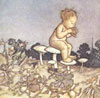
Thumbnail illustration by Ed Young in Yeh-Shen: A Cinderella Story from China by Ai-Ling Louie.